






News

News
What Makes Pure Mysore Silk So Special? | Premvastra
by Prem Vastra on Apr 06 2026
What Makes Pure Mysore Silk So Special? Everything You Need to Know
There are fabrics. And then there is Pure Mysore Silk.
If you have ever held a Mysore silk saree in your hands, you already know — there is something quietly extraordinary about it. The way it catches the light. The way it drapes like water. The way it feels cool against your skin even on a warm afternoon. It is the kind of fabric that doesn't need to announce itself. Its presence does the talking.
But what exactly makes Pure Mysore Silk so special? Why has it held its throne as one of India's most beloved and prestigious silk fabrics for centuries? And why do connoisseurs, brides, and textile lovers keep coming back to it, generation after generation?
At Premvastra, we believe every woman who wears Mysore silk deserves to know the full story behind the fabric she carries. So let's unfold it — thread by thread.
Royal Legacy: The History of Mysore Silk
The story of Mysore silk begins in the royal courts of Karnataka. It was Hyder Ali, the 18th-century ruler of Mysore, who first introduced sericulture — the cultivation of silk — to the region. His son Tipu Sultan further expanded it, recognising silk as a symbol of royal prestige and economic strength.
But it was under the reign of Krishnaraja Wadiyar IV in the early 20th century that Mysore silk truly flourished. He established the Mysore Silk Weaving Factory in 1912, which became the backbone of organised silk production in the region. What began as a royal initiative gradually became a cultural identity — and today, Mysore silk is not just a fabric. It is a legacy.
This rich heritage is part of what makes every Pure Mysore Silk saree feel like more than just a purchase. It feels like an inheritance.
The GI Tag: India's Seal of Authenticit
In 2005, Pure Mysore Silk received the prestigious Geographical Indication (GI) tag — one of the first Indian textiles to do so. This is a legal certification that confirms the fabric can only be called "Pure Mysore Silk" if it is:
Produced in the Mysore region of Karnataka
Made using pure mulberry silk yarn
Woven with a minimum of 65% pure silk content and finished with genuine zari (gold or silver thread)
Manufactured by the Karnataka Silk Industries Corporation (KSIC) or registered weavers under its umbrella
This GI tag is not just a label — it is a promise. When you buy a certified Pure Mysore Silk saree, you are guaranteed authenticity, craftsmanship, and traceability. At Premvastra, every Mysore silk saree in our collection is sourced with this commitment to genuineness in mind.
What Makes Pure Mysore Silk Unique? The Key Qualities
Let's get to the heart of it. Here is what truly sets Pure Mysore Silk apart from every other fabric in the world:
1. Unmatched Softness and Texture
Pure Mysore Silk is woven from the finest mulberry silk threads, which come from silkworms fed exclusively on mulberry leaves. This controlled diet produces a thread that is extraordinarily fine, smooth, and lustrous. The resulting fabric has a softness that is immediately noticeable — almost like a second skin.
2. The Signature Crepe-Like Finish
Unlike many other Indian silks, Mysore silk has a distinctive semi-matte, crepe-like texture on one side and a gentle sheen on the other. This gives it a refined, understated elegance rather than an overpowering shine — making it perfect for both grand occasions and sophisticated everyday wear.
3. Durability That Lasts Generations
One of the most remarkable qualities of Pure Mysore Silk is its exceptional durability. A well-maintained Mysore silk saree can last 20, 30, even 50 years — and often gets passed from mother to daughter as a treasured heirloom. This longevity makes it one of the smartest investments in a woman's wardrobe.
4. Natural Temperature Regulation
Silk is a naturally breathable and temperature-regulating fabric. Pure Mysore Silk keeps you cool in summer and warm in winter — an extraordinary quality that synthetic fabrics simply cannot replicate. This makes it a practical choice across seasons and climates.
5. Rich, Deep Colour Absorption
The pure mulberry silk thread used in Mysore silk has an exceptional ability to absorb dyes, resulting in colours that are vivid, deep, and long-lasting. Whether it is a jewel-toned royal blue, a warm turmeric yellow, or a classic peacock green — Mysore silk holds colour like no other fabric.
6. The Zari Borders and Pallus
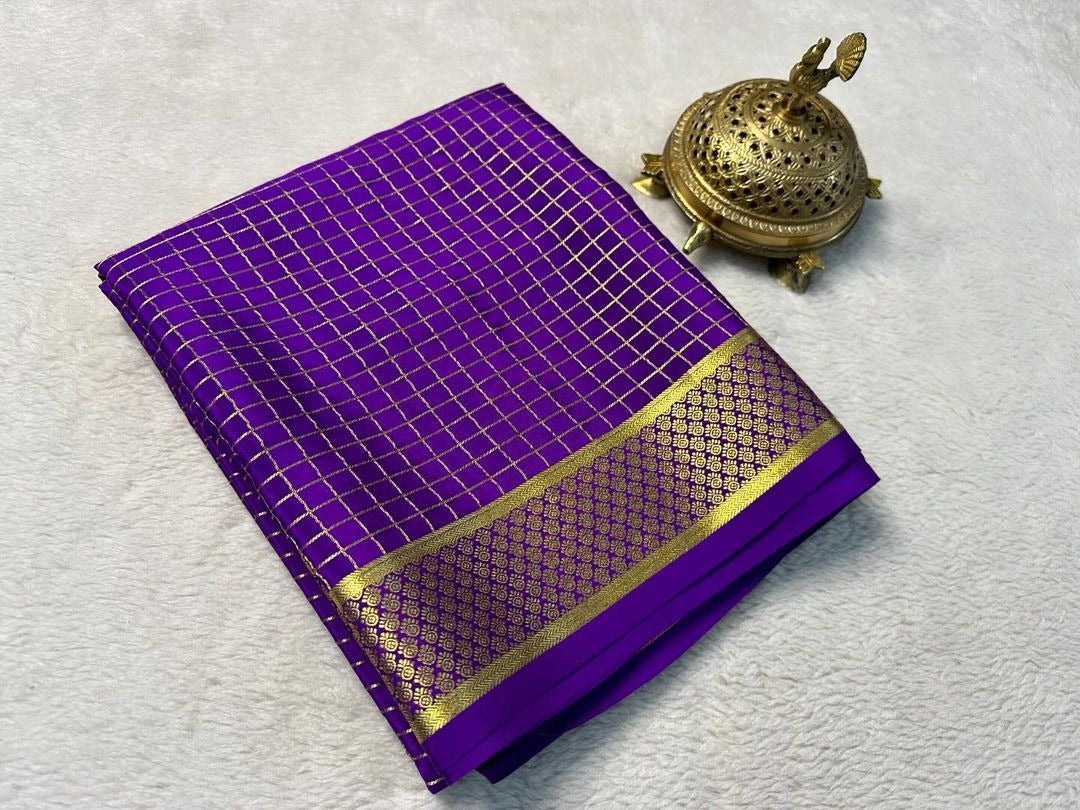
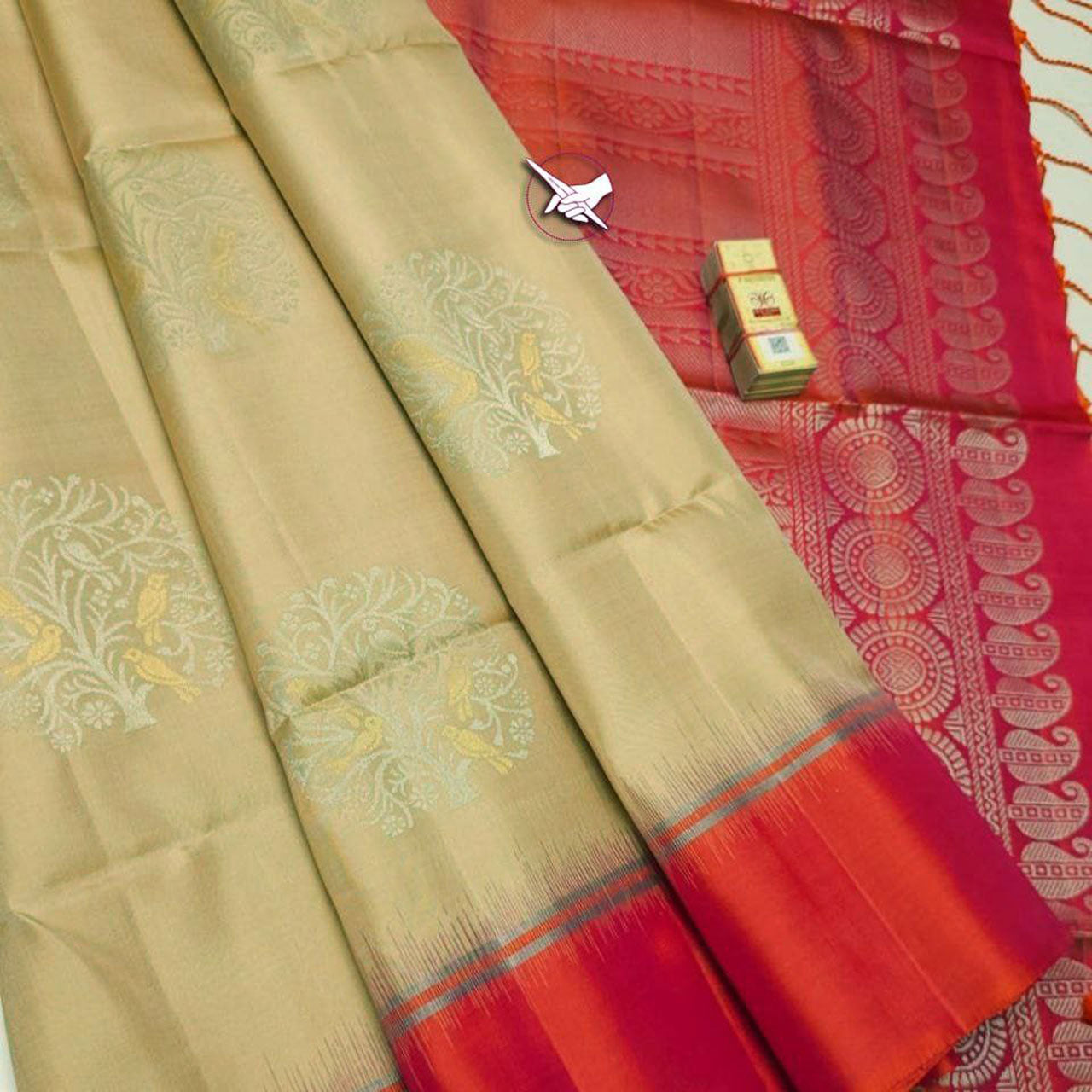
Authentic Pure Mysore Silk sarees are characterised by their real zari — gold or silver thread woven into the border and pallu. Traditional motifs like elephants, peacocks, lotuses, and temple patterns adorn these sections, adding a layer of artistry that makes each saree a wearable work of art.
How Pure Mysore Silk Is Made: The Weaving Process
Understanding the making of Mysore silk deepens your appreciation for every single saree. Here is a simplified look at the journey from cocoon to drape:
Sericulture: Silkworms are carefully cultivated and fed mulberry leaves until they spin their cocoons.
Reeling: The cocoons are immersed in hot water to loosen the thread, which is then carefully reeled onto spools.
Twisting and degumming: Multiple threads are twisted together for strength, then treated to remove natural gum and enhance softness.
Dyeing: The yarn is dyed using high-quality colourants that bond deeply with the silk fibre for lasting vibrancy.
Weaving: Skilled weavers work on handlooms or semi-automatic looms, interlacing silk with real zari to create the saree body, border, and pallu.
Finishing and quality check: Each saree is inspected, finished, and — if meeting GI standards — certified and stamped.
This process is slow, skilled, and deeply intentional. It is why no two Pure Mysore Silk sarees are ever completely identical, and why each one carries within it the fingerprints of the artisan who made it.
Pure Mysore Silk vs. Other Indian Silks: How Does It Compare?
India is home to many magnificent silk traditions. Here's how Pure Mysore Silk stands apart:
Feature
Mysore Silk
Banarasi Silk
Kanjivaram Silk
Tussar Silk
Texture
Soft, crepe-like
Heavy, structured
Heavy, crisp
Rough, natural
Sheen
Subtle, refined
High shine
High shine
Matte
Occasion
Versatile
Weddings, grand events
Weddings, festivals
Casual, ethnic wear
Zari Work
Real gold/silver zari
Real zari, heavy
Real zari, bold
Minimal
Weight
Light to medium
Heavy
Heavy
Light
Durability
Exceptional
High
High
Moderate
Mysore silk sits in a unique space — it is lighter than Kanjivaram, more refined than Tussar, and more versatile than Banarasi — which is why it suits such a wide range of occasions and women.
When and How to Wear Pure Mysore Silk
One of the greatest gifts of Pure Mysore Silk is its effortless versatility. Here is how you can style it across different occasions:
Festive and religious occasions: Choose rich jewel tones with traditional zari borders and temple motifs
Weddings (as a guest or family member): Opt for classic colours like deep red, emerald green, or royal blue with broad zari pallus
Cultural events and classical performances: Mysore silk complements classical Indian dance forms like Bharatanatyam beautifully
Office and formal gatherings: Lighter shades with minimal zari work offer a sophisticated, professional look
Gifting: A Pure Mysore Silk saree is one of the most thoughtful and prestigious gifts for mothers, mothers-in-law, and brides
(Internal link suggestion: Link to a styling guide or gifting guide blog on Premvastra)
How to Identify an Authentic Pure Mysore Silk Saree
With imitations flooding the market, knowing what to look for is essential:
Look for the KSIC silk mark or GI certification label
The fabric should feel cool and smooth to the touch, never stiff or rough
Hold it up to light — genuine silk has a natural, soft iridescence, not a plastic-like shine
The zari borders should feel slightly heavier than the body of the saree
Burn test (for fabric samples): real silk burns slowly, smells like burnt hair, and leaves ash — synthetic silk melts and smells like plastic
Always purchase from trusted, transparent sources. At Premvastra, authenticity is never compromised.
Caring for Your Pure Mysore Silk Saree
A Mysore silk saree is an investment — treat it like one:
Dry clean for best results; if hand washing, use cold water with a very mild detergent
Never wring or twist — gently press out excess water in a soft towel
Dry in shade, never under direct sunlight, to protect colour and lustre
Store wrapped in a clean muslin or cotton cloth, not plastic
Refold periodically to avoid permanent crease lines along fold marks
Keep away from perfume and deodorant — chemicals can stain or weaken silk fibres
Conclusion: Some Fabrics Are Timeless for a Reason
Pure Mysore Silk has survived centuries of changing trends, fashion revolutions, and the rise of synthetic fabrics — and it has emerged not just intact, but more beloved than ever. Because some things simply cannot be replicated: the softness, the story, the soul.
When you choose a Pure Mysore Silk saree, you choose craftsmanship over convenience, heritage over hype, and beauty that does not fade with the season.
At Premvastra, we are honoured to be your trusted companion in this journey. Our curated collection of Pure Mysore Silk sarees brings you the finest, most authentic pieces — so that you can wear history, and make it your own.
👉 Explore Premvastra's Pure Mysore Silk Collection — Because You Deserve the Real Thing.
Frequently Asked Questions (FAQs)
Q1. What is Pure Mysore Silk made of?
Ans:-Pure Mysore Silk is made from 100% pure mulberry silk yarn, produced by silkworms cultivated in Karnataka. Authentic sarees also include real zari (gold or silver thread) in the borders and pallu, and carry a GI certification confirming their origin and quality.
Q2. Why is Pure Mysore Silk so expensive?
Ans:-The price reflects the craftsmanship, time, and rarity of the materials involved. From cultivating silkworms and reeling threads to handloom weaving with real zari, every step is labour-intensive and skill-driven. Additionally, the GI tag ensures the saree meets strict quality standards — you are paying for authenticity, not just fabric.
Q3. How do I know if my Mysore silk saree is genuine?
Ans:- Look for the KSIC silk mark or GI tag on the saree. Genuine Mysore silk feels cool and smooth, has a soft natural sheen (not plastic-like shine), and the zari borders feel slightly heavier than the rest of the fabric. Always buy from reputable, certified retailers like Premvastra.
Q4. Can Pure Mysore Silk sarees be worn in summer?
Ans:- Absolutely. In fact, silk's natural temperature-regulating properties make Mysore silk surprisingly comfortable in warm weather. It is breathable, lightweight, and keeps you cool — which is one of the reasons it has been loved across seasons for centuries.
Q5. Is Pure Mysore Silk a good gift option?
Ans:- It is one of the finest gifts you can give. A Pure Mysore Silk saree is timeless, deeply cultural, and carries immense emotional value. It is a popular choice for weddings, baby showers, housewarmings, and festive gifting — something the recipient will treasure for decades.
Q6. How long does a Pure Mysore Silk saree last?
Ans:- With proper care, a Pure Mysore Silk saree can last 20 to 50 years — and sometimes even longer. Many families pass them down as heirlooms across generations. This longevity makes it not just a purchase, but a long-term investment in beauty and culture.

News
The Ancient Art of Kalamkari: India's Oldest Print on Silk
by Prem Vastra on Apr 04 2026
The Ancient Art of Kalamkari: How India's Oldest Print Tells Stories in Silk
Imagine wearing a piece of history. A fabric that doesn't just cover your body but carries on its surface the whispered tales of gods, rivers, and ancient civilizations. That is exactly what Kalamkari is — not just a textile art, but a living, breathing story told through colour and thread.
The ancient art of Kalamkari is one of India's most treasured handcraft traditions, dating back over 3,000 years. Born in the Andhra Pradesh region, this hand-painted or block-printed textile technique has graced temple walls, royal courts, and now — beautifully — the wardrobes of women who appreciate culture and craft. At Premvastra, we believe that when you drape a Kalamkari silk saree, you're not just wearing fabric. You are wearing a story.
What Is Kalamkari? Understanding the Basics
The word Kalamkari comes from two Persian words — "Kalam" (pen) and "Kari" (craftsmanship). Together, they mean "work done with a pen." Traditionally, artisans used a bamboo or date palm pen dipped in natural fermented jaggery and iron solution to hand-draw intricate motifs onto fabric.
Every single line, every petal, every deity's expression — drawn by hand, with extraordinary patience.
Kalamkari is not one single style. Over centuries, it evolved into two distinct schools, each with its own soul:
1. Srikalahasti Style (Pen Kalamkari)
Originating from the temple town of Srikalahasti in Andhra Pradesh, this style is entirely hand-drawn using a kalam (pen). Artists here focus on mythological narratives — stories from the Ramayana, Mahabharata, and Puranas. The detailing is incredibly fine, and no two pieces are ever identical.
2. Machilipatnam Style (Block Kalamkari)
From the coastal town of Machilipatnam, this style uses hand-carved wooden blocks to print repeating patterns onto fabric. It reflects Persian and Mughal influences, featuring floral motifs, paisleys, and geometric designs. This style developed during trade with Persian merchants, which is also where the name "Kalamkari" itself gained Persian roots.
The Making of Kalamkari: A Labour of Love
What makes Kalamkari truly extraordinary is its process. There are no shortcuts here. Creating an authentic Kalamkari piece involves over 20 painstaking steps, from preparing the fabric to the final wash.
Here's a simplified look at the journey:
Fabric preparation: The cloth (usually cotton or silk) is treated with a mixture of cow dung, seed milk, and myrobalan (a natural mordant) to prepare it to accept natural dyes.
Sketching the base: Artisans outline the design with a tamarind pen dipped in fermented jaggery and iron solution, which creates a black outline.
Natural dyeing: Colours are derived entirely from natural sources — indigo for blue, pomegranate rind for yellow, madder root for red, and iron-rich mud for black.
Multiple dye baths: The fabric goes through several rounds of dyeing, drying, and washing — each layer adding depth and richness to the final palette.
Final detailing: Once the base colours are in place, artists go back in to add finer details, expressions, and highlights.
The entire process can take weeks to months for a single saree or fabric piece. This is why authentic Kalamkari is considered a luxury — not because of artificial pricing, but because of the irreplaceable time and human artistry embedded in every inch.
Kalamkari on Silk: Where Tradition Meets Elegance
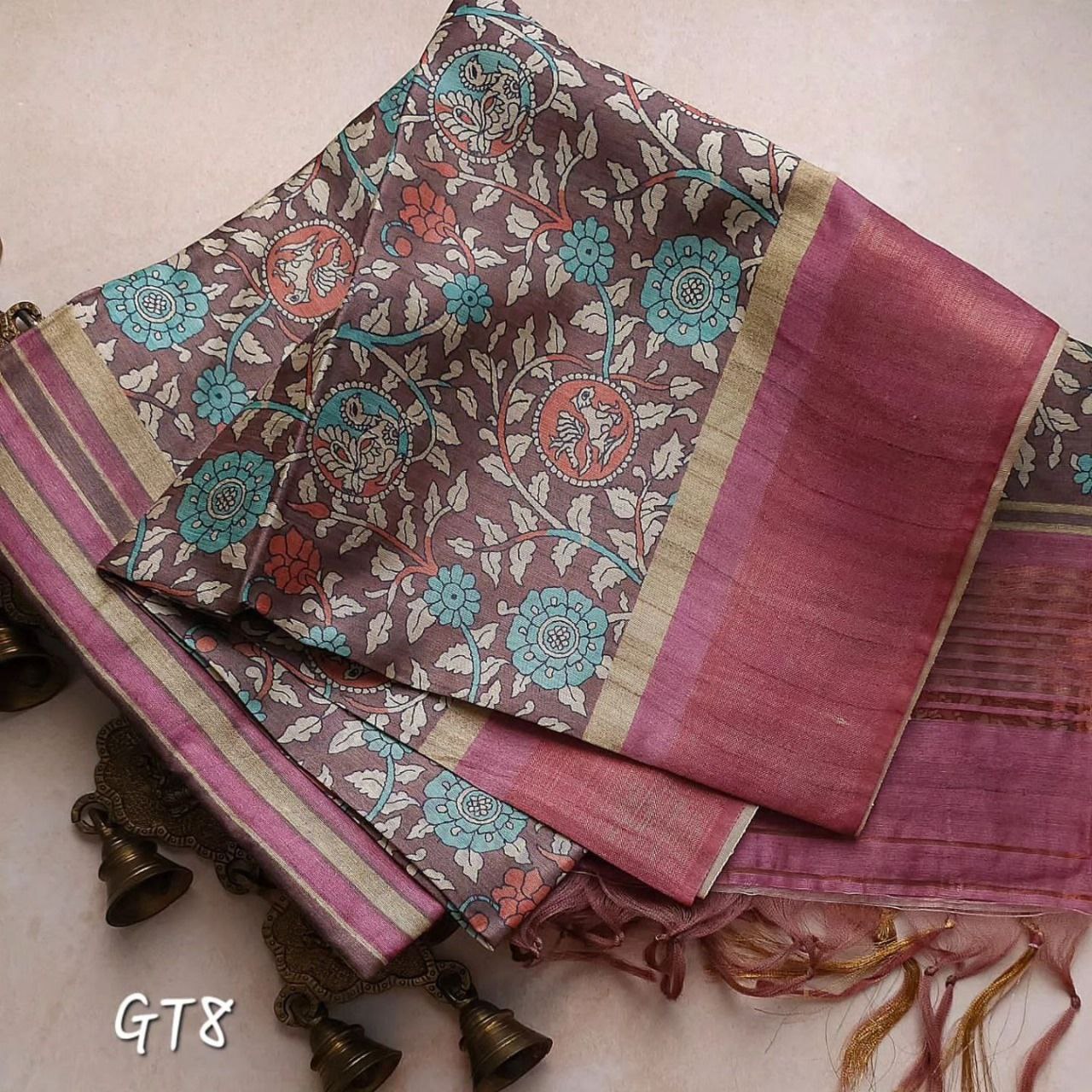
While Kalamkari has traditionally been practised on cotton, its marriage with silk fabric has created something truly breathtaking. Silk's natural sheen amplifies the depth of natural dyes, making the colours richer and the motifs more dramatic.
A Kalamkari silk saree is one of the most sought-after pieces in Indian ethnic fashion today — and for good reason:
The lustre of silk brings out the intricate pen work in a way cotton simply cannot.
The drape and flow of silk makes mythological and floral motifs look almost animated.
The combination creates a saree that is versatile — grand enough for festive occasions yet refined enough for cultural events and office wear.
At Premvastra, our Kalamkari silk sarees are carefully sourced from artisan clusters in Andhra Pradesh, ensuring that every piece you receive carries genuine handwork and authentic natural dyes.
The Stories Kalamkari Tells
One of the most magical aspects of the ancient art of Kalamkari is its role as a visual storytelling medium. Long before printed books, Kalamkari fabric panels were used in temples to narrate epics and educate devotees.
Common motifs and their meanings include:
Dashavatara (Ten avatars of Vishnu): Representing the cycle of creation, preservation, and destruction
Mahabharata and Ramayana scenes: Depicting key moments like the exile of Rama or the Kurukshetra war
Peacocks and lotuses: Symbols of beauty, purity, and divine grace
Tree of Life: A recurring motif across both Srikalahasti and Machilipatnam styles, representing interconnectedness and nature
Floral and paisley patterns: Influenced by Mughal artistry, symbolising prosperity and abundance
When you wear a Kalamkari saree, you carry these stories with you — on your shoulders, in every fold of the pallu.
Why Kalamkari Is More Relevant Today Than Ever
In a world of fast fashion and machine-made prints, Kalamkari stands as a quiet revolution. Here's why modern women are returning to this ancient craft:
Sustainability: Natural dyes and handmade processes make Kalamkari one of the most eco-friendly textile traditions in the world.
Uniqueness: No two hand-drawn Kalamkari pieces are ever exactly alike. You own something truly one-of-a-kind.
Cultural pride: Wearing Kalamkari is an act of supporting Indian artisans and keeping a 3,000-year-old tradition alive.
Versatility: From sarees and dupattas to kurta fabrics and blouse pieces, Kalamkari adapts to modern silhouettes beautifully.
Investment value: Authentic Kalamkari, especially on silk, appreciates in value over time — much like a piece of art.
How to Care for Your Kalamkari Silk Saree
Owning a Kalamkari piece is a privilege that comes with a little responsibility. Here's how to keep it looking as beautiful as the day you received it:
Dry clean or hand wash gently in cold water with mild soap.
Never wring — the natural dyes can bleed if handled roughly.
Dry in shade, away from direct sunlight to preserve colour vibrancy.
Store separately in a muslin cloth to prevent colour transfer.
Iron on reverse side at low heat to protect the painted surface.
Conclusion: Wear a Story, Support an Art
The ancient art of Kalamkari is far more than a design trend — it is India's oldest conversation between an artist's hand and the universe of stories around them. Every motif is a word, every saree a complete narrative passed down through generations.
At Premvastra, we are proud to bring these narratives to you — ethically sourced, artisan-made, and wrapped in the elegance that only handcrafted silk can offer. When you choose a Kalamkari silk saree from our collection, you are not just making a style choice. You are making a statement about the kind of beauty you believe in — timeless, meaningful, and deeply human.
👉 Explore Premvastra's Kalamkari Silk Collection and find the story that speaks to you.
Frequently Asked Questions (FAQs)
Q1. What makes Kalamkari different from other Indian fabric prints?
Ans :- Unlike screen-printed or digitally printed fabrics, authentic Kalamkari is either hand-drawn with a bamboo pen or block-printed using hand-carved wooden blocks. It uses natural dyes and requires up to 20 manual steps, making each piece truly unique and artisanal.
Q2. Is Kalamkari only available on cotton, or can it be on silk too?
Ans :- Traditionally, Kalamkari was done on cotton. However, Kalamkari on silk has become hugely popular due to silk's natural sheen, which enhances the vibrancy of natural dyes and elevates the overall elegance of the piece.
Q3. How can I tell if a Kalamkari saree is authentic?
Ans :- Authentic Kalamkari will have slight irregularities in the motifs (since it is hand-drawn), a natural earthy smell from the dyes, and colours that are rich but not fluorescent. Machine-made imitations tend to have perfectly uniform patterns and synthetic brightness.
Q4. Are Kalamkari dyes safe for sensitive skin?
Ans :-Yes. Traditional Kalamkari uses plant-based and mineral-based natural dyes — such as indigo, madder root, and pomegranate — which are generally safe even for sensitive skin. Always ensure you're purchasing from a trusted source like Premvastra that works with verified artisans.
Q5. What occasions are Kalamkari silk sarees suitable for?
Ans :- Kalamkari silk sarees are wonderfully versatile. They work beautifully for festive celebrations, weddings, cultural events, Puja occasions, and even formal gatherings where you want to make an elegant, culturally rich impression.
Q6. Does wearing Kalamkari support Indian artisans?
Ans :- Absolutely. Purchasing authentic Kalamkari directly supports the weaver and painter communities in Andhra Pradesh, many of whom belong to families that have practised this craft for generations. It is one of the most meaningful ways to invest in Indian handloom heritage.
ABOUT US
Your trusted destination for authentic Indian fabrics — celebrating tradition, empowering artisans, and delivering excellence with every order.
Your trusted destination for authentic Indian fabrics — celebrating tradition, empowering artisans, and delivering excellence with every order.